
HOW TO HANDLE BAD DAYS
So you had a bad day… Welcome to the club, it’s overflowing with equestrians here!
When you jump a horse and it goes well, it’s one of the greatest highs a human can have - being in sync with the animal is sensational! When it goes poorly, it can be catastrophically depressing, making you feel useless and guilty for wasting your horse’s efforts.
Firstly, give yourself some grace because you’re attempting something extremely difficult in the first place. I tend to think horse sport is the most difficult form of sport - on top of what is necessary to be prepared and aligned as a human athlete, you also have to account for the nuances of preparing an animal athlete. I mean c’mon, they’re horses! The number of “x factors” is at least doubled from any human-only sport. Horses are beautiful creatures, and it’s amazing how creatively they can go off script when you least expect it. All this to say, the common adage amongst equestrians is that in the sport “you lose a lot more than you win.” That’s putting it kindly. In horse sport, there are a LOT of bad days. So, so, so many I can’t count them and I’d be afraid to try.
Mitigating your bad days is one of the greatest strengths a person can have, especially if you’re working with horses. The animals are emotionally sensitive; when we are upset or unfocused, they feel it. The best as athletes stay present, and getting hung up on failure is antithetical to being your best self in the now.
All that considered, I realized that as a rider it behooves me to be great at having bad days. I’ve made it one of my personal missions over the past 2 years to handle bad days as well as a person possibly can.
Previously, I didn’t believe that you could learn and grow from mistakes if you didn’t get really upset about them. I thought self loathing was necessary to learn / grow, and my insistence on being hard on myself became depressing and all-consuming. In 2024 I spent a few months working with a therapist who specialized in “helping people who feel stuck in life,” and I realized I had it all backwards. You can learn from mistakes without beating yourself up about it, and more importantly, you can’t hate yourself into being the person you want to become. This statement really changed my whole life, and my perspective on “losing.”
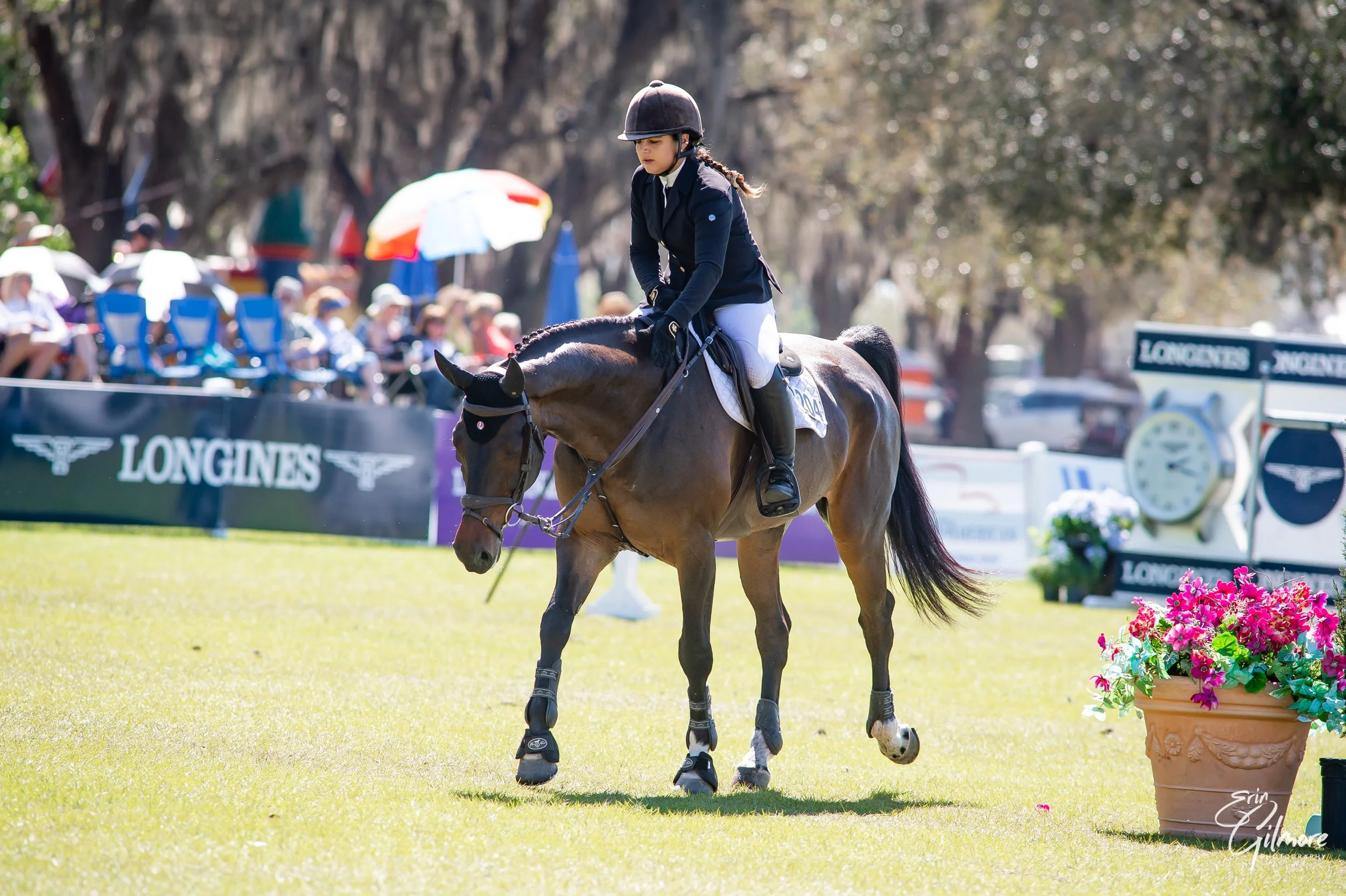
No matter what you’re pursuing in life, there are gonna be bad days. You need to make sure that you take something good out of the bad day, rather than letting the bad day take something good out of you.
Here are my predominant strategies for dealing with bad days:
First and foremost rule #1 will always be
Have A Sense of Humor
If you can laugh at yourself, please, always do. Having a sense of humor about your failures is invaluable. It takes the sting out of the feelings of disappointment and helps keep your energy light. The horses immediately react positively to this; it signals to them that a negative experience need not subtract from their confidence. Additionally, the people around you will like you more if you’re able to have a sense of humor on a hard day, that’s just a fact of life. (I also personally believe that if you can laugh at yourself in your hardest moments thought your life that you will stay younger and hotter into old age.)
Some tips for having a sense of humor on a bad day (that I do personally) include: (A) make a GIF of yourself falling off, (B) Sync the video of you missing to a funny TikTok audio, (C) Keep a tally of your bad rounds and when it gets to a certain number buy yourself a present!
WW(insert initial here)D?
Another tool I use is building a vivid idea of the archetypal best loser ever in my own eyes, and when I’m facing a failure I think about how they would handle it. I personally use Boyd Martin (Multi-Olympic Superstar Championship Level Event Rider) as a foil for this. I don’t know him personally but my imaginary idealized version of him is extremely confident, has a great sense of humor, and stays super cool and logical in a rough moment. Someone who learns quick from mistakes and doesn’t get hung up on looking backwards. Being able to imagine another person handling your same situation with grace and dignity helps. If someone you look up to was having your same bad day, it wound’t change their value in your eyes. You would see it as a challenge they will overcome and learn from. So think of yourself the same.
I think Michael Jordan and Tom Brady would go home after a bad day with unwavering belief in themselves. They may be frustrated but they know they have the skills necessary to correct course on any issues. The GOATs certainly wouldn’t think they’re wretched and awful and should quit after a bad day or even a prolonged slump, so neither should you.
Accept Reality
When something goes wrong, as soon as it happens, it’s already in the past. It’s immediately fading into history with all the other atrocities that have ever happened and there’s nothing you can do about it. I find it helpful to take ownership of mistakes immediately. Claiming your errors gives you authority and ownership over them. You can’t change it now, so own it as proudly as you can and move forward.
Remove Negative Emotions and Disappointment
When you have a bad day, get upset, and radiate negative energy, your judgment is clouded and your ability to be objective is weakened (not to mention it’s unpleasant for the people and animals around you). In order to maximize learning from mistakes, you need to be objective and realistic. Any one day is not a reflection of your personal worth or where you are at in the big picture.
Errors Are Data Points. If You’re Not Winning, Be Learning.
All failures are information you can use to learn and improve. You tried, you failed, and now you have new information to grow with. Simple as that!
Get clear about what went wrong, why it happened, and what you can do to prevent the same issue in the future. It can be helpful to write these things down, or at least to talk it out with a friend or mentor. Be sure to stick to the facts and not to dramatize your errors, even if it feels dramatic.
Example: If you brutally missed a distance, figure out why to the best of your ability. This could be you were going too slow, got distracted, your horse spooked, or a million other things. Once you have a why, figure out what you can do differently to prevent repeating the mistake. This could be carrying more pace, staying focused, committing to your distances earlier, etc. (Bonus points if you can boil it down to a skill you can practice).
It’s also important to classify if the error was related to your preparation, or your actual piloting in the heat of the moment. If you failed to prepare properly, you can adjust your warmup but keep riding the exact same. If you made a mistake riding, then be careful not to mess with your preparation the next time around, just fix the ride.
Figure out What You’re Going to Do
They say that when bad things happen how you feel and how you react is only 10% about the bad thing itself and 90% about what you’re going to do about it. If you fall off and you’re flustered, upset and you don’t know what happened or why, you’ll feel a gross swarm of emotions which convolute your logical brain. If you immediately get clear on what went wrong and what can be changed, you’ll maintain emotional stability and have an easier time moving forward and making the necessary, logical changes.
Get Comfortable With Not Knowing
Sometimes you can’t quite make heads or tails of why your day went so bad. Don’t panic. If you looked at your situation unemotionally and still can’t locate the cause of your issues, then make peace with that! Horses can stump you. That’s ok. DO NOT spiral, there is a solution, you just don’t know what it is yet. If you don’t have an explanation, make a plan for how you can get one. This might be getting outside help, consulting a veterinarian, experimenting with new equipment, or it might be following the exact same plan again and seeing if you get the same result or not. Since horses can’t speak to us directly, sometimes we have to put on our deerstalker caps and play Sherlock Holmes for a time. It’s an opportunity to learn and grow as horsemen.
Rely on Your Intuition
Sometimes you’re having a bad day, and you know in your gut it’s just a fluke. Sometimes you have a great result but you have a strong sense that something is not right with you and your horse. My advice is to be very honest (read: unemotional) with yourself about your intuitive assessments, and follow them. There’s nothing worse than having a bad day, going against your instincts about it, and then trying to move on. Even if you’re incorrect, you’ll sleep better at night if you follow your gut.
If you ride horses as a hobby or for a living your life is already great. We befriend wild animals and then inspire them to run and jump and play with us. In the grand scheme of things it’s all pretty absurd and magical.
No matter what you’re pursuing in life, there are gonna be bad days. You need to make sure that you take something good out of the bad day, rather than letting the bad day take something good out of you. Be grateful for the opportunity to learn something, even if it’s not something you wanted to have to learn!